Hach DR300 Chlorine Dioxide Pocket Colorimeter: Complete Review & Reference (2026)
Disclosure: This page contains affiliate links. If you purchase through our links, we may earn a commission at no extra cost to you. See our affiliate disclosure.
Method: DPD Method 8138 with Glycine Pre-Treatment • LR: 0.01–0.50 mg/L ClO₂ • HR: 0.1–10.0 mg/L ClO₂ • IP67
Source: Hach DR300 User Manual DOC022.97.90639 Ed.5 (09/2021) • Method DOC316.53.01063 (ClO₂)
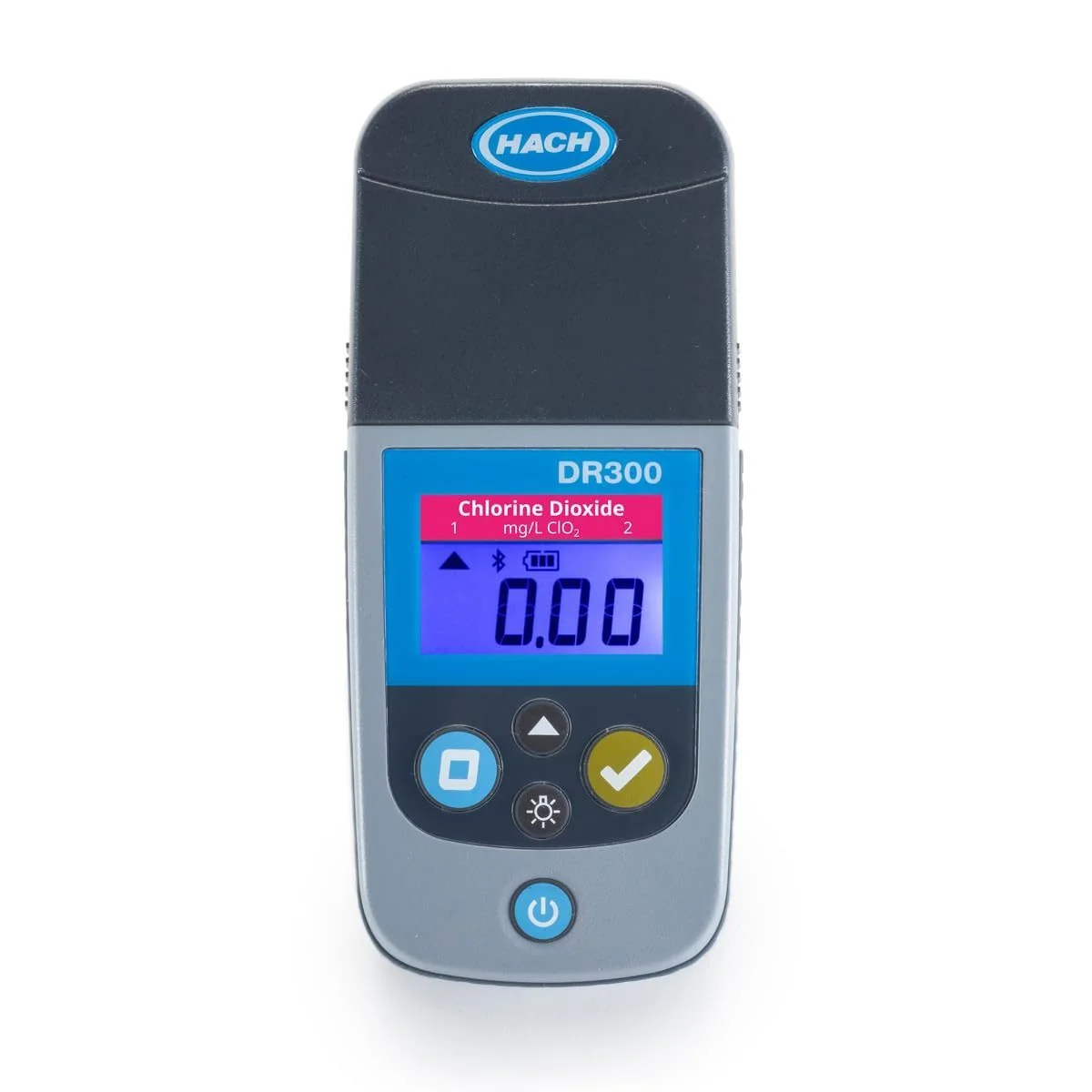
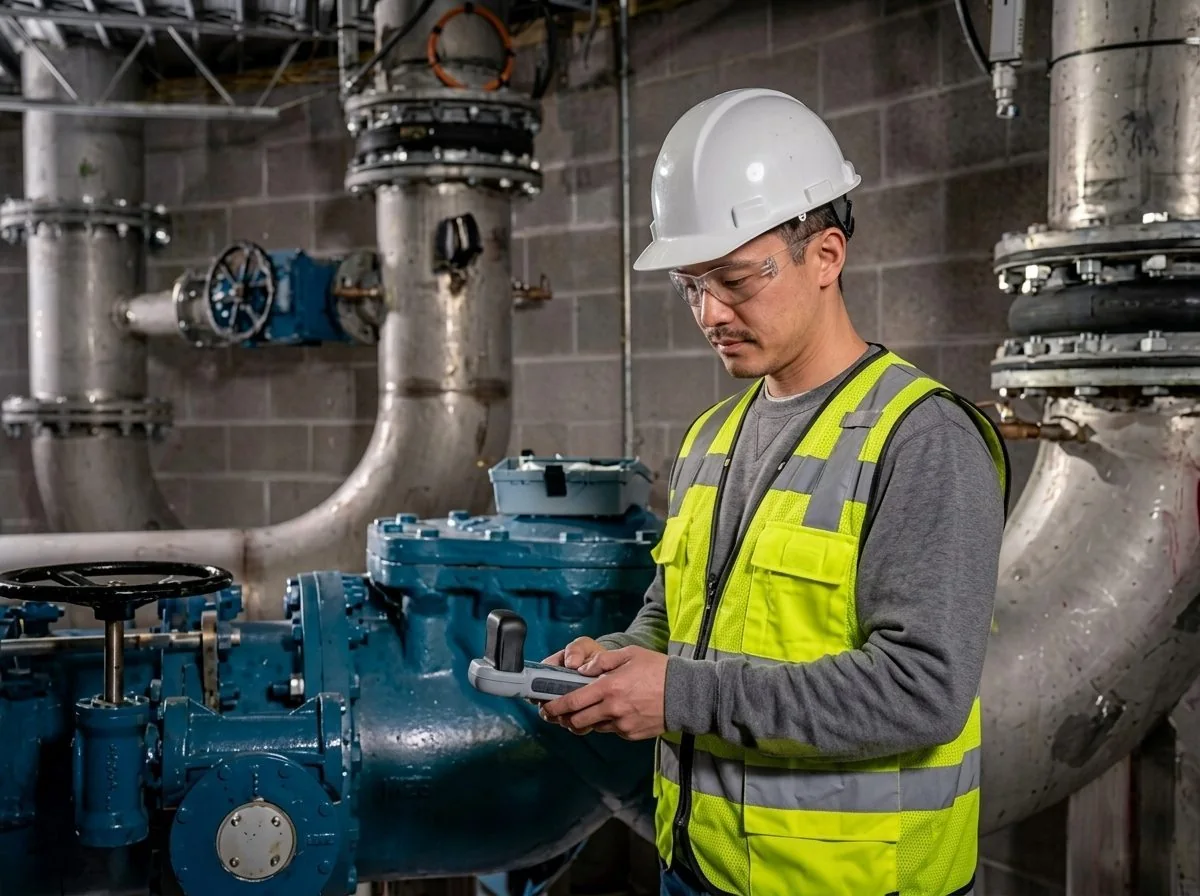
Why Chlorine Dioxide Requires Its Own Instrument
Chlorine dioxide (ClO₂) is a powerful disinfectant used in drinking water treatment primarily because it does not produce trihalomethanes (THMs) or haloacetic acids (HAAs) — the chlorination disinfection byproducts regulated under the Stage 2 D/DBP Rule. It is also used in food processing, paper manufacturing, and industrial cooling systems for its biocidal properties at lower concentrations than chlorine.
The critical distinction for testing: DPD reagent reacts with both free chlorine and chlorine dioxide, producing the same pink color. In a water system that contains both oxidants — which is common in ClO₂ treatment systems where excess free chlorine may also be present — a standard DPD chlorine test cannot distinguish between them. The DR300 Chlorine Dioxide model uses a glycine pre-treatment step that eliminates free chlorine interference before the DPD measurement, so the reading reflects only ClO₂.
How Glycine Pre-Treatment Works
Glycine (aminoacetic acid, H₂N-CH₂-COOH) reacts selectively and nearly instantaneously with free chlorine (hypochlorous acid and hypochlorite) to form N-chloroglycine — a non-oxidizing chloro-amino acid compound. N-chloroglycine does not react with DPD. Chlorine dioxide does not react with glycine under the conditions of the test.
The sequence: glycine is added first to the sample, converting all free chlorine to non-reactive N-chloroglycine. DPD is then added. The resulting pink color responds only to chlorine dioxide. The glycine pre-treatment converts what would be a combined "total oxidant" reading into a specific ClO₂ reading.
LR vs HR — Configuration Selection
| Feature | Low Range (LR) | High Range (HR) |
|---|---|---|
| Measurement range | 0.01–0.50 mg/L ClO₂ | 0.1–10.0 mg/L ClO₂ |
| Primary application | Finished drinking water MRDL compliance (EPA limit: 0.8 mg/L) | Source water, pre-treatment, industrial ClO₂ generation systems |
| Sample cell | 25 mm round glass, 10 mL | 25 mm round glass, 10 mL |
| Reagent pillows per test | 1 DPD pillow + glycine | 1 DPD pillow + glycine (higher concentration) |
| EPA compliance | Yes — covers MRDL range | Monitoring only; above MRDL range |
EPA Regulatory Context for Chlorine Dioxide
| Regulatory Limit | Value | Basis |
|---|---|---|
| MRDL — ClO₂ (distribution) | 0.8 mg/L ClO₂ | USEPA Stage 1 D/DBP Rule; measured at first customer |
| MRDLG — ClO₂ (goal) | 0.8 mg/L ClO₂ | Same as MRDL (MRDLG = MRDL for ClO₂) |
| MCL — Chlorite (ClO₂−) | 1.0 mg/L | ClO₂ disinfection byproduct; running annual average |
| Entry point monitoring frequency | Daily | Required at ClO₂ treatment entry point to distribution |
| Distribution system monitoring | 3 samples per quarter (minimum) | At least one per quarter per treatment plant |
| Source: 40 CFR Part 141, Subpart L (Stage 1 D/DBP Rule). Consult current EPA and state primacy agency requirements for your system size and source water type. | ||
Standard Test Procedure — LR (0.01–0.50 mg/L)
Fill the 25 mm round cell to the 10-mL mark with sample
Triple-rinse the cell with sample before the measurement fill. Minimize sample exposure to light during collection and testing.
Add glycine reagent — swirl to mix — wait 1 minute
Glycine pre-treatment is the critical step. Add the glycine reagent to the 10 mL sample. Swirl to mix. Wait 1 full minute to allow complete reaction with free chlorine. Do not proceed early — incomplete free chlorine conversion will cause positive bias in the ClO₂ result.
Add 1 DPD Total Chlorine Powder Pillow — swirl to mix
After the glycine wait, add the full contents of one DPD Total Chlorine Powder Pillow to the glycine-treated sample. Swirl gently for 20 seconds to dissolve. Pink color develops if ClO₂ is present.
Insert cell — install cap — press ZERO immediately
Insert the cell into the instrument, install the instrument cap, and press ZERO promptly. ClO₂ color development with DPD is faster than free chlorine — read without delay.
Fill second cell with fresh sample — no reagents — press ZERO then READ
Use a fresh sample cell with untreated sample water as the blank. Zero with the blank, then swap back to the reagent cell and press READ. Result displays in mg/L ClO₂.
Applications
| Application | Range | Notes |
|---|---|---|
| Drinking water MRDL compliance | LR (0.01–0.50 mg/L) | Daily monitoring at entry point to distribution; quarterly in distribution system |
| Treatment plant process control | LR or HR depending on dose | Monitor ClO₂ dose at generator and after contact time |
| Food processing — CIP sanitization | HR (0.1–10.0 mg/L) | ClO₂ used in food-contact surface sanitization and produce washing |
| Paper/pulp bleaching monitoring | HR | Industrial ClO₂ concentrations significantly higher than drinking water |
| Cooling tower biocide monitoring | HR | ClO₂ used as an alternative to bromine in some cooling water programs |
| Bottled water production | LR | ClO₂ used as a terminal disinfectant; must not exceed MRDL in finished product |
Interferences
| Interferent | Effect | Treatment |
|---|---|---|
| Free chlorine (Cl₂) | Eliminated by glycine pre-treatment — no interference when procedure is followed correctly | Ensure complete glycine reaction (1 full minute) before DPD addition |
| Monochloramine (NH₂Cl) | Reacts slowly with DPD; may cause slight positive bias at high concentrations | Read promptly — delayed readings increase chloramine response |
| Ozone (O₃) | Positive interference — ozone reacts with DPD similarly to ClO₂ | Cannot be corrected; measure ozone separately and apply correction or use dedicated ozone method |
| Manganese (Mn >0.1 mg/L) | Positive interference in oxidized form | Pre-filter through 0.45-micron membrane to remove particulate Mn |
| Turbidity | Scatters light, high turbidity causes falsely high readings | Filter through 0.45-micron before testing if turbidity is visible |
| Temperature (<15°C) | DPD and glycine reaction rates decrease at low temperature | Extend glycine contact time at low temperatures; allow cold samples to warm to room temperature when possible |
Reagents & Replacement Parts
| Item | Hach Item No. | Notes |
|---|---|---|
| DPD Total Chlorine Reagent Powder Pillow, 10 mL | 2105569 | 1 per test; same reagent as standard DPD chlorine |
| Glycine Reagent (for ClO₂ pre-treatment) | 2105866 (verify) | Added before DPD to eliminate free chlorine interference |
| Sample cell, 25 mm round glass (10 mL) | 2427606 | Same cell as DR300 Chlorine LR model |
| DR300 instrument cap | LPV445.97.08100 | Must be installed before ZERO or READ |
| Sample cell cap | LPV445.97.08200 | For capping cell between measurement steps |
| Batteries, AAA (4-pack) | Standard AAA alkaline | Replace all 4 simultaneously |
| Always confirm current item numbers at hach.com before ordering — item numbers are subject to change. | ||
Related DR300 & Hach Instrument References
- Hach DR300 Chlorine (Free & Total) — DPD Methods 8021 & 8167
- Hach DR300 Iron FerroVer® — 0.02–5.00 mg/L Fe
- Hach DR300 Phosphate — Reactive Phosphorus & Phosphonates
- Hach DR300 Bromine — DPD Method 8016
- Hach DR300 Ammonia — Nessler & Salicylate Methods
- Hach DR300 Nitrate — Cadmium Reduction Method 8039
- Hach DR300 Manganese — PAN Method 8034
- Hach DR900 Multiparameter Colorimeter — 48+ Parameters
- Hach DR1900 Portable Spectrophotometer — 340–800 nm
- Colorimeter vs Spectrophotometer — Complete Buyer’s Guide
- All Commercial Water Lab Guides